
Leftover chicken breast has a bad reputation, and most of us earned it for the poor bird by microwaving it uncovered until it squeaked.
Cooking a big batch of protein-heavy dinners only saves time if you actually want to eat them on Wednesday. The fix is picking dishes that were built to be reheated in the first place.

Pick proteins that forgive a second heating
Lean, quick-cooking cuts suffer first. A chicken breast or a thin pork chop has very little fat or connective tissue to protect it, so a second round of heat squeezes out whatever moisture was left.
Cuts with a bit more fat, and anything cooked low and slow in liquid, behave differently. Thighs, drumsticks, ground beef, pulled pork and braised beef all reheat much closer to how they tasted the first night.
Drumsticks are a good case in point. These Instant Pot chicken drumsticks come in at 32 grams of protein a serving on the recipe card, and pressure-cooked dark meat hangs onto its juices far better than a roasted breast does.

Sauce helps too. Anything sitting in broth, gravy or salsa has a built-in buffer against drying out, which is why so many people swear chili tastes better the next day.
Cooking method matters as much as the cut. Long, moist cooking in a slow cooker or pressure cooker turns tough connective tissue into gelatin, and that gelatin is what keeps reheated meat tender rather than stringy.
If chicken breast is the family favorite, you don't have to give it up. Slice it after cooking instead of before, store the slices in a spoonful of their cooking liquid, and reheat them gently at half power.
What a well-built high-protein portion looks like
Most home cooks know roughly what's in their dinner but couldn't put a number on the protein. That makes it hard to tell whether the batch you're about to split into containers will actually keep anyone full until bedtime.
A recipe card gives you protein per serving, but servings drift the moment you start eyeballing portions into a stack of mismatched containers. Having a reference point for one good dinner-sized serve fixes that.
Ready-meal kitchens print their numbers per container, so they make a handy benchmark. Take the high protein meals from Bondi Meal Prep, an Australian ready-meal service: its free-range chicken breast and sweet potato plate lists 401 calories and 46.8 grams of protein in one serve.
Do the math on that and close to half the calories come from protein. A grass-fed lamb and broccoli rice bowl from the same range goes further still, at 347 calories, 53.1 grams of protein and only 4.8 grams of carbs.
Their portions mostly fall between 201 and 350 grams, or roughly 7 to 12 ounces. That's a sensible target when you're filling your own containers, since it reads as a real dinner without quietly turning into two.
You don't have to hit those exact figures at home. What's worth copying is the shape: a generous serving of protein as the anchor, a measured scoop of rice or potato, and vegetables filling the rest of the box.
Store it so it reheats well
How you cool and store a batch decides half of how it tastes later. The USDA's guide to leftovers and food safety says to get cooked food into the fridge within 2 hours, eat it within 3 to 4 days (or freeze it for 3 to 4 months), and reheat it to 165°F.
Shallow containers cool faster than one deep pot, which matters for texture as much as safety. Divide soups and braises into single portions before they go in the fridge, and you'll skip the nightly scooping too.
When you reheat, cover the container and add a splash of water or broth. The steam keeps meat from drying out, and a quick stir halfway through deals with the cold spots every microwave seems to have.
Freeze anything you won't get to by day four. Write the date on the lid, because everything looks the same once it's frozen solid.
Four dinners that pass the day-three test
Chicken and rice soup
Rice keeps drinking up broth in the fridge, so add a little extra liquid when you warm it. This Crockpot chicken and rice soup lists 36 grams of protein and 476 calories a serving, which puts it right in ready-meal territory.

Shredded or ground beef bowls
Cook the meat with one simple seasoning, then change the base each night. Rice on Monday, a baked potato on Tuesday, and a pile of greens on Wednesday make the same pound of beef feel like three different dinners.
Braised chicken thighs
Simmer them in salsa, curry sauce or plain broth. They come out of the microwave almost exactly as they went into the fridge, which is about the highest praise a leftover can get.

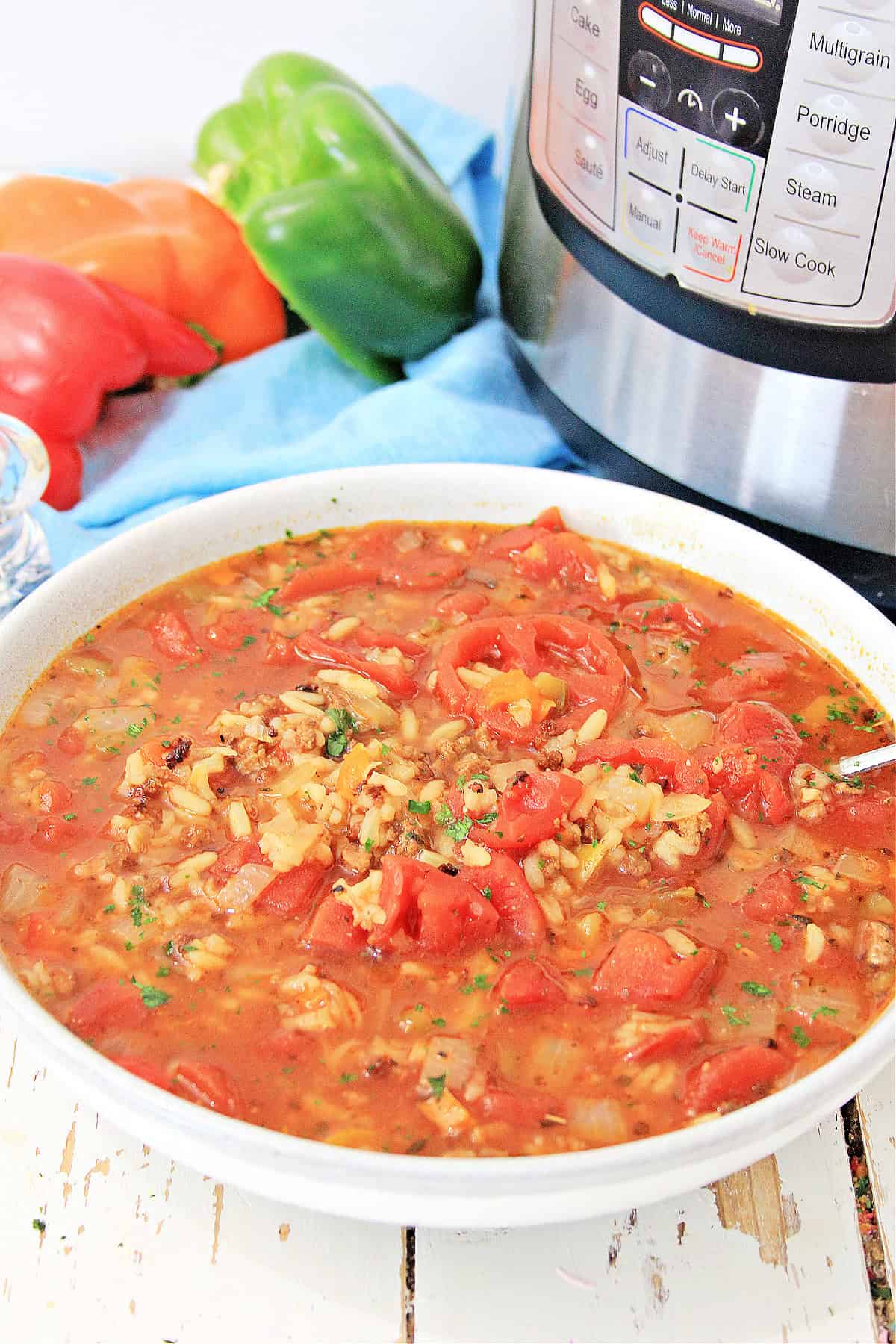
Stuffed pepper soup
You get all the flavor of stuffed peppers with none of the fiddly assembly, and it freezes beautifully. This Instant Pot stuffed pepper soup sits at 21 grams of protein a bowl, so put a couple of hard-boiled eggs on the side if you want dinner to land higher.
What to leave off the batch list
Some dinners really are best the night you make them. Breaded and fried proteins go soft, fish dries out and gets strong-smelling, and pasta keeps soaking up its sauce until it turns to mush.
You can still work around them. Cook pasta fresh and reheat only the meat sauce, or keep fish for the first night and save the sturdier dishes for later in the week.
Make the batch work for you
A good make-ahead week comes down to two choices: proteins that survive a second heating, and portions that make each container a complete meal. Get both right, and Thursday's dinner tastes a lot like Sunday's.