
Board Games for Party Nights That Give Your Brain a Real Workout
The model of board games as slow-paced and rule-heavy is just old. The board games of today are a whirlwind: they may accommodate a batch of players in a kitchen table setting and have a level of social interaction that will make you talk about it days later. In the best of these games, the fun and intellectual challenge are one and the same. You don’t learn something and have a good time; you have a good time, and that is why you are learning.
Fast-Paced Strategy Games
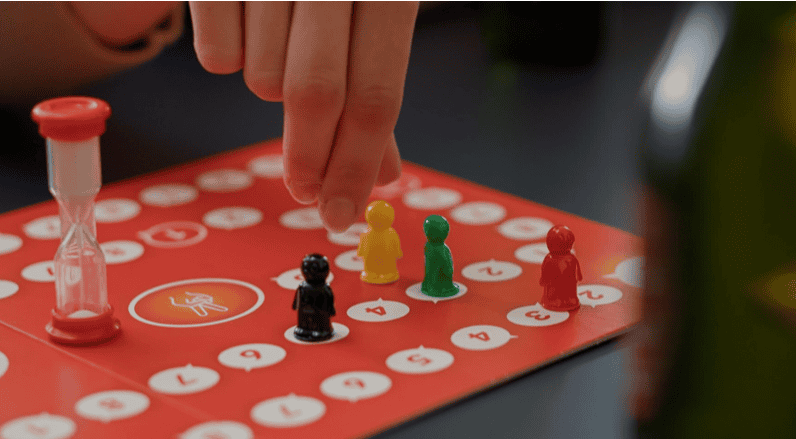
Light strategy games occupy a bright corner in the party gaming genre. Games like Azul, Ticket to Ride, and Sushi Go! come to mind. Azul is a game about creating mosaics with colored tiles while sabotaging your opponents’ progress. It’s a strategy game masquerading as a visual puzzle. The features that separate this good light strategy game from forgettable ones:
- Rounds that complete in under 45 minutes so the game does not outlast the energy in the room.
- Mechanics that create meaningful choices without requiring extensive rules knowledge.
- Visible player interaction that makes strategy social rather than solitary.
- A scoring system transparent enough that players understand why they lost and what to try differently.
According to research by Martinez and Gimenez, strategic tabletop gaming is associated with improved planning ability and cognitive flexibility in adults. It is particularly fair when games introduce constraint-based decisions that require adjusting plans as new information arrives.
Social Deduction and Critical Thinking
When bluffing and deducing, the brain works differently, focusing not on numbers and space but on social dynamics. The goal is to try to understand people’s behavior and find discrepancies between what they say and what they actually know. A similar approach works in casino table games, so we recommend checking out the Slotozilla offers NV review to help you choose a good site to test your human reading talent. You can choose casinos with live poker, baccarat, or blackjack. There are many options to suit any needs.
The social deduction games Werewolf, Secret Hitler, The Resistance, and One Night Ultimate Werewolf are popular for a reason. That’s because social deduction is hard, and it gets better with practice, just like any cognitive skill. The cognitive process involved here - reading people, understanding inconsistencies, and updating beliefs - is the same one that makes a person more effective at work and in life.
Word and Association Games
Word games at parties are often dismissed as trivial entertainment, but the best word games require a level of thinking that most people never engage in deliberately: thinking about the connection between unrelated ideas. Here are some of the games and their features:
| Game | Core Cognitive Skill | Players | Avg. Round Length |
| Codenames | Lateral association, abstraction | 4–8 | 20–30 min |
| Azul | Pattern recognition, planning | 2–4 | 30–45 min |
| One Night Werewolf | Deductive reasoning, social reading | 3–10 | 10 min |
| Just One | Creative association, vocabulary | 3–7 | 20–30 min |
| Decrypto | Encoding, memory, pattern inference | 3–8 | 30–45 min |
| The Resistance | Probabilistic reasoning, bluff detection | 5–10 | 30–45 min |
Researchers Luchini and Kaufman examined the topic of divergent thinking and found that the skill of creating new connections between unrelated concepts is one of the strongest indicators of creative intelligence. Under competition, this skill increases the most. Games like Codenames, Just One, and Decrypto represent this kind of environment.
Cooperative Problem-Solving Games
Cooperative games shift your game inside your head. It’s not beating the other players; it’s beating the game. And these are lessons taught by cooperative games:
- Real-time communication under pressure, where incomplete information must be shared efficiently.
- Collective prioritization, where the group has to agree on what matters most before acting.
- Role distribution, since cooperative games often reward specialization and clear task ownership.
Pandemic is the archetype, where players share information about outbreaks in a global game space, working together to choose where to take actions before the game gets too big to manage. It’s tuned so that the difficulty level is just right so that the group can have the right amount of pressure without frustration.
Brain-Friendly Party Game Formats
Not every game that is called a party game qualifies as such, however. How the game plays is as important as what the game includes, and what plays well for two experienced players may not survive an attempt with eight new players. The elements that make a game truly party-friendly while still providing the intellectual value:
- Rules that can be taught verbally in under five minutes without a reference sheet.
- A player count that scales from two to eight without significantly changing the game’s quality.
- Rounds short enough that eliminated players or losing teams are never sitting idle for long.
- Enough variation in outcomes that the same group can play multiple sessions and face different problems.
Games that have social sparks along with mental stimulation are the most successful ones. However, the question for any group isn’t whether a game meets the qualifications. It’s how to balance the level of mental stimulation with the atmosphere.




Leave a Reply