
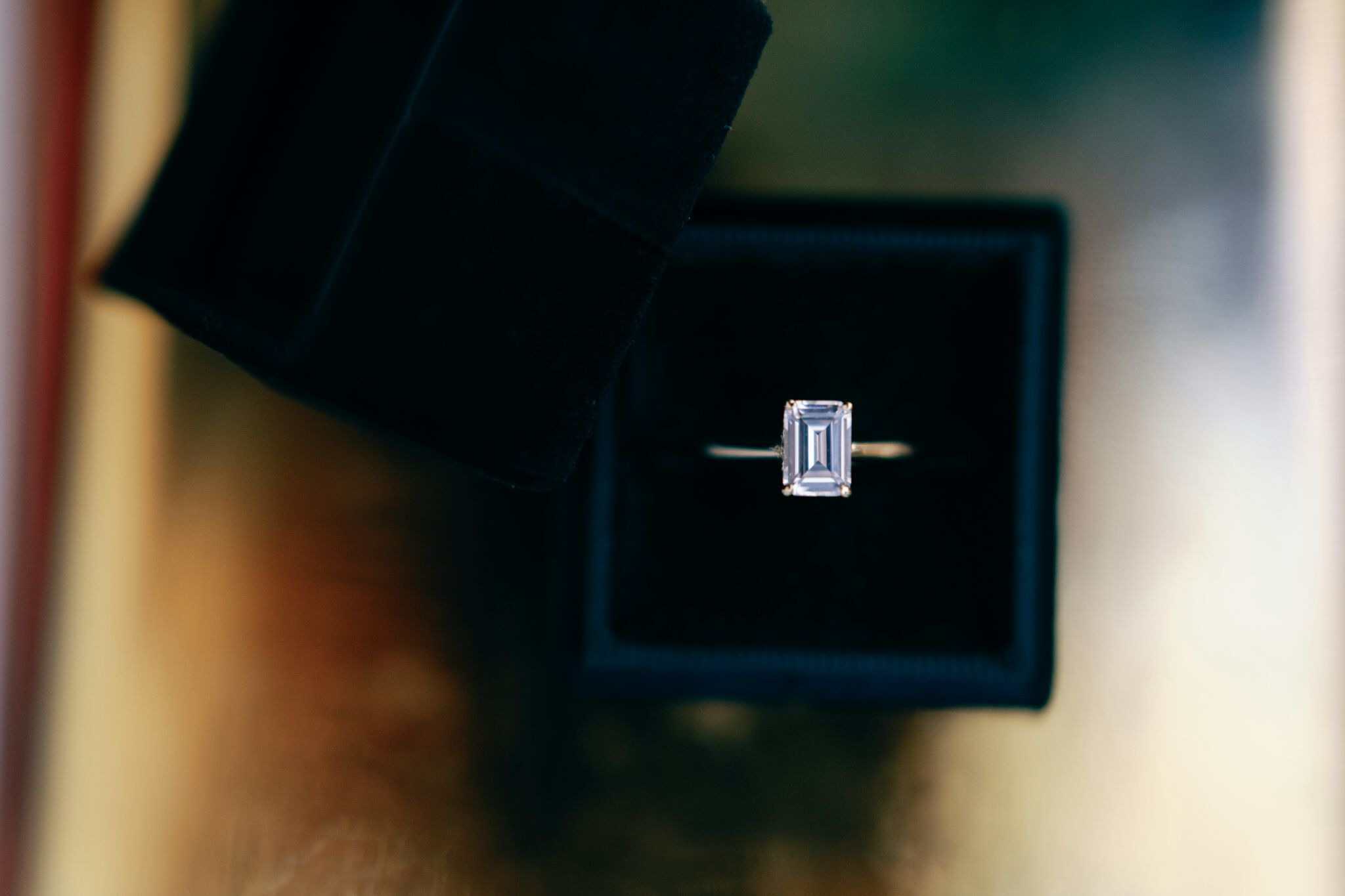
The emerald-cut diamond offers something quite different from the brilliant-cut shapes that dominate most engagement ring collections. Its long rectangular facets, open table, and stepped pavilion create a slow, deep sparkle rather than the sharp flash of a round or cushion cut. Retailers with a strong diamond focus, such as Bercotts Jewellers, carry emerald-cut rings across a range of carat weights and settings that highlight the specific qualities this shape is known for.
The Origins and Character of the Emerald Cut
The emerald cut was developed for emerald gemstones before being adopted for diamonds. Its stepped facets were designed to reduce the pressure on the stone during cutting, which was particularly important for the relatively brittle emerald. When applied to diamonds, the same facet arrangement produces a very different kind of light return from that of brilliant cuts. Instead of the high-intensity sparkle of a round diamond, the emerald cut creates long, mirror-like flashes known as the hall-of-mirrors effect, which many people find more refined and elegant.
Why Clarity Matters More with an Emerald Cut
The open, step-cut facets of an emerald-cutt diamond make its interior more visible than in a brilliant cut, where the facet pattern tends to mask inclusions. This means the stone's clarity grade is more important when selecting an emerald cut. A stone that might be perfectly acceptable in a round brilliant at a slightly lower clarity grade could show inclusions more obviously in the same carat weight as an emerald cut. Most jewellers recommend choosing a clarity grade of VS2 or higher to ensure the stone appears clean to the naked eye.
The Length-to-Width Ratio and Its Effect on Appearance
Emerald cut diamonds are available in a range of proportions, from nearly square to notably elongated. The most popular length-to-width ratios fall between 1.30 and 1.50, producing a recognisable rectangular shape with gently truncated corners. More elongated ratios, above 1.60, give a slimmer, more dramatic look that some people prefer. The right proportion depends entirely on your personal preference and how you want the stone to sit on your hand. Comparing different ratios in person is the most useful way to determine what appeals to you.
Settings That Suit the Emerald Cut
The clean geometric lines of an emerald-cut diamond are well complemented by settings that echo its angular character. A four- or eight-claw solitaire setting allows the stone's shape to be fully appreciated without distraction. A channel- or pavé-set band adds brilliance alongside the main stone without competing with its distinct light quality. Side stones set in the step-cut style, known as the trapezoid or baguette cut, maintain the geometric aesthetic and frame the centre stone cohesively. Bolder, high-set prong settings also work well, elevating the stone and maximising its visibility.
Colour Grades and the Emerald Cut
In terms of clarity, the emerald cut is more transparent about a diamond's colour than most brilliant cuts. In a round brilliant, the complex facet pattern disperses colour across many small surfaces, which makes slight tints less visible. In an emerald cut, colour can be more noticeable because the stone has fewer, larger facets. Many buyers choose a higher colour grade, typically G or above, when selecting an emerald cut diamond to ensure the stone appears bright white rather than showing warmth. This is worth discussing with a jeweller when comparing stones.
Vintage and Contemporary Appeal
The emerald cut has an established presence in the history of fine jewellery, particularly associated with the Art Deco period when geometric, architectural designs were fashionable. This heritage gives it a vintage quality that many buyers find appealing. At the same time, its clean lines and architectural structure make it feel very current in minimal, contemporary jewellery designs. Whether set in a traditional platinum solitaire or a modern yellow gold ring with a slim band, the emerald cut adapts well to both aesthetics.
Lab-Grown Emerald Cut Diamonds
Lab-grown emerald-cut diamonds are increasingly popular because the shape rewards high clarity and colour, and lab-grown stones often achieve higher grades in both categories than natural diamonds of equivalent price. The additional budget that comes from choosing a lab-grown stone can be directed towards a larger carat weight or a better-quality setting. For a cut where the quality of the stone is so visible, the ability to allocate more to the stone itself is particularly relevant.
Finding the Right Emerald Cut Ring
Choosing an emerald-cut engagement ring is a deliberate, considered decision that tends to suit people who value refinement and longevity over trend. The shape rewards careful selection of stone quality and complements a wide range of personal styles through the right choice of setting and metal. Taking the time to look at several stones under good lighting and to understand the interplay among carat weight, clarity, colour, and proportions will ensure you make a choice that holds its appeal for years to come.



Leave a Reply