
Nobody warned me that starting Wegovy would mean staring at a plate of food I used to love and feeling almost nothing. No hunger, no enthusiasm, just a vague awareness that food exists and I should probably eat some of it. If you are in this phase, hello, I see you.
Here is what I know now that I wish someone had told me at the start: you do not need to overhaul your entire relationship with food, download seventeen apps, or eat clean. You just need to know two things, eat enough protein, eat enough fibre, and understand why those two things matter more than anything else when your appetite has basically clocked off.
The protein targets here come from Voy's Wegovy nutrition guide, developed by their clinical team for semaglutide users. It's more sensible than most of what you'll find on this topic, and I've used it as the framework here. The rest is just practical, no-nonsense guidance on actually eating while your appetite is somewhere else.
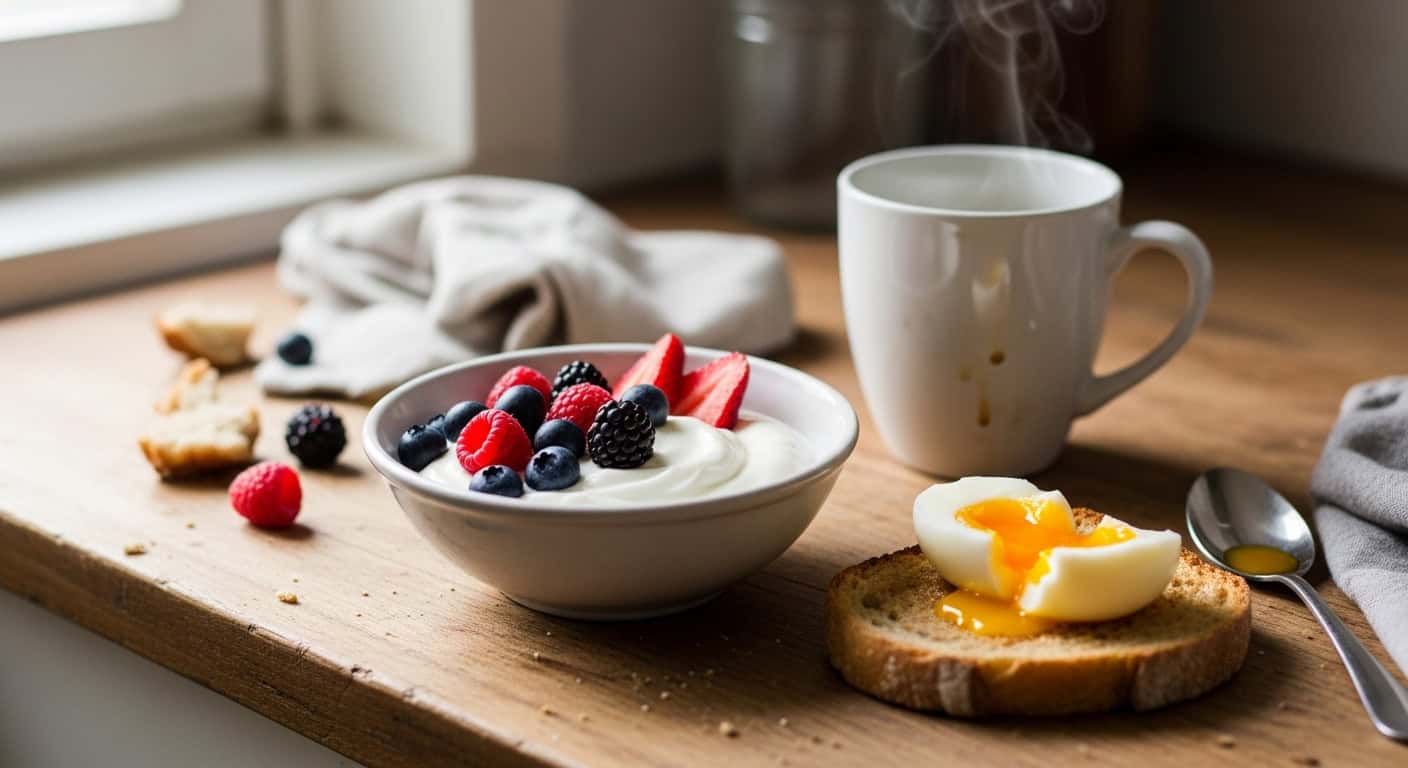
This is what eating on Wegovy often looks like. A small, solid meal. Not a full plate. Not a masterpiece. Just enough protein, some vegetables, a piece of toast. That is genuinely fine.
The only two things you actually need to track
There is a version of Wegovy nutrition advice online that involves tracking every macro, buying specialised protein supplements, and restructuring every meal around a spreadsheet. You do not need to do any of that. You need to do two things.
1. Get enough protein
When you lose weight, some of what you lose is muscle alongside fat. How much muscle you lose depends largely on how much protein you eat. During active weight loss, the guidance is 1.2 to 1.6g of protein per kilogram of body weight per day. For a 70kg person that is roughly 84 to 112g. Sounds like a lot. It is not, if you build your meals around protein.
The reason this matters on Wegovy specifically is that your appetite has dropped significantly. On a full pre-Wegovy appetite, you probably hit a reasonable protein intake without thinking about it. On a Wegovy appetite, where you might be eating two-thirds of what you used to, you need to be more deliberate. Not obsessive. Just deliberate.

The fix is simple: eat protein first at every meal. Whatever else is on your plate, eat the protein portion before you fill up on carbs or vegetables. That way, if your appetite cuts off early, the most important nutritional element is the one you have actually eaten.
| You do not need to become a person who talks about protein at every meal. You just need to make sure there's some on your plate and that you eat it before the bread. |
2. Get enough fibre
Wegovy slows down gastric emptying. That is how it works. But slowed digestion without adequate fibre creates a predictable problem: constipation. The recommended target is 30g of fibre per day. Most UK adults eat around 20g. If you are currently eating less than usual and making low-fibre choices because they are easy, that gap widens quickly.
Oats, lentils, beans, berries, broccoli, and wholegrain bread are your best tools here. A small bowl of porridge in the morning, a handful of berries with your yoghurt, a bowl of lentil soup for lunch. None of this is dramatic. It just needs to be deliberate enough to actually happen.
The protein cheat sheet
Here is how much protein is in the foods you are probably already eating, so you can stop wondering.
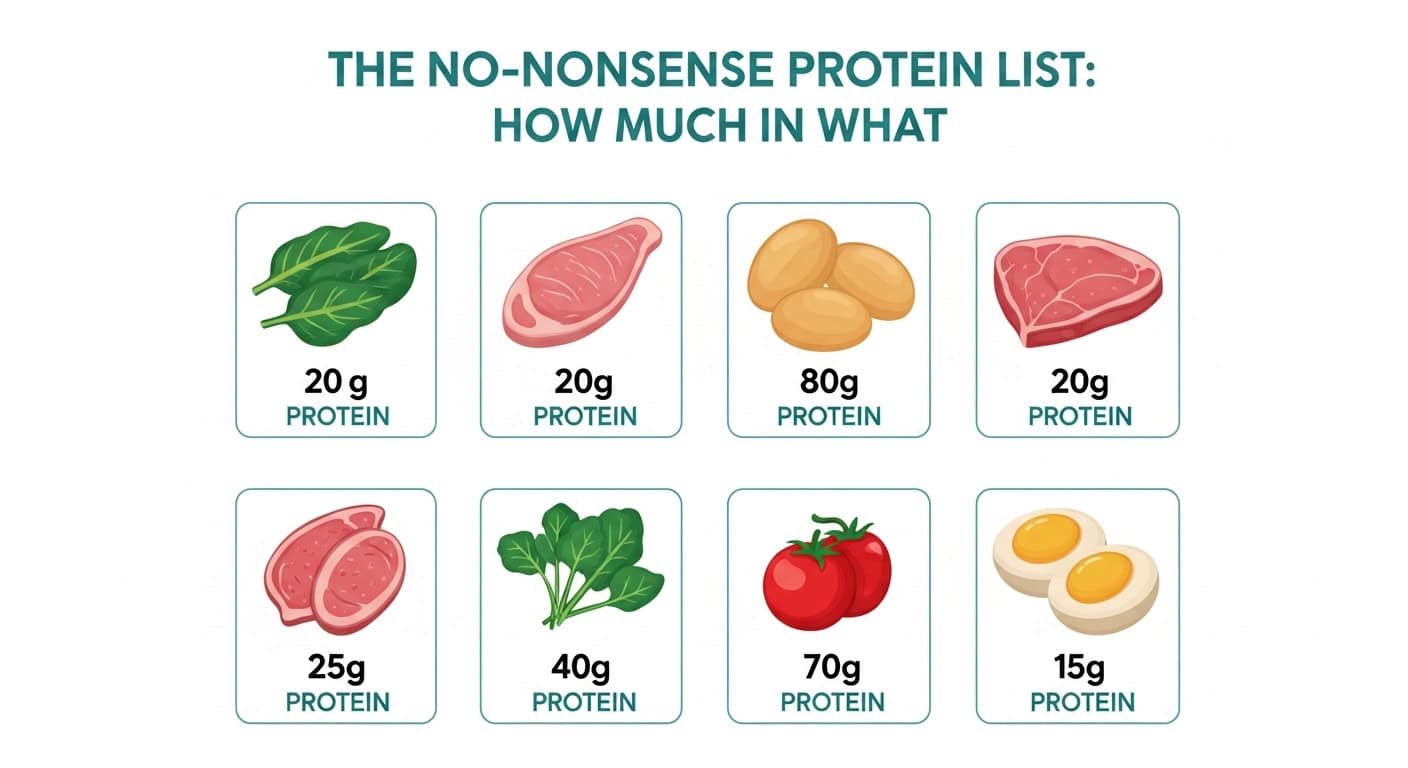
The protein numbers for foods you will actually eat. No supplements required if you build meals around two or three of these each day.
- Chicken breast, 100g cooked: 32g. The classic for a reason. Bake it, poach it, slice it cold into a salad.
- Tuna, 100g canned: 25g. Essentially free protein in a tin. Keep four tins in the cupboard and you always have a protein source.
- Salmon, 100g: 25g. Bake it for 12 minutes at 180C. That is the entire recipe.
- Eggs, 2 large: 14g. Softly scrambled or soft-boiled. Takes less than five minutes.
- Tempeh, 100g: 19g. Worth discovering if you haven't. Pan-fry until crisp in sesame oil and soy. Genuinely delicious.
- Greek yoghurt, 200g full-fat: 12g. Eat it for breakfast, as a snack, as a sauce alternative. Full-fat because it is more satisfying in small amounts.
- Cottage cheese, 100g: 11g. Polarising texture but genuinely useful. Mix it with some cucumber and everything bagel seasoning and you have a snack in 30 seconds.
- Lentils, 120g cooked: 9g, plus 8g fibre. Protein and fibre in the same bowl. Red lentil soup is one of the best meals on a low appetite day.
You do not need all of these. You need two or three sources per day, across three meals. Build each meal around one protein anchor and you are most of the way there.
What a day of eating actually looks like
The structure is simple. Half your plate is vegetables. A quarter is protein. A quarter is a complex carb. A small drizzle of something good (olive oil, avocado, nuts). That is it. The Voy guide calls this the balanced plate model and it is genuinely the most useful framework because it scales down to whatever portion size your appetite allows on any given day.
Breakfast
| Option A: Greek yoghurt and berries Full-fat Greek yoghurt, a handful of raspberries or blueberries, a tablespoon of ground flaxseeds, a drizzle of honey. About 14g protein, 5g fibre, takes 90 seconds. No cooking required. |
| Option B: Eggs on toast Two soft-boiled or softly scrambled eggs on one slice of wholemeal toast. Add some wilted spinach if you feel like it. About 20g protein, genuinely fills you up in a small portion. |
| Option C: Porridge on a nausea day Plain porridge made with milk rather than water, a tablespoon of almond butter, half a banana. About 15g protein, very gentle on the stomach, one of the best low-appetite morning options. |
Lunch
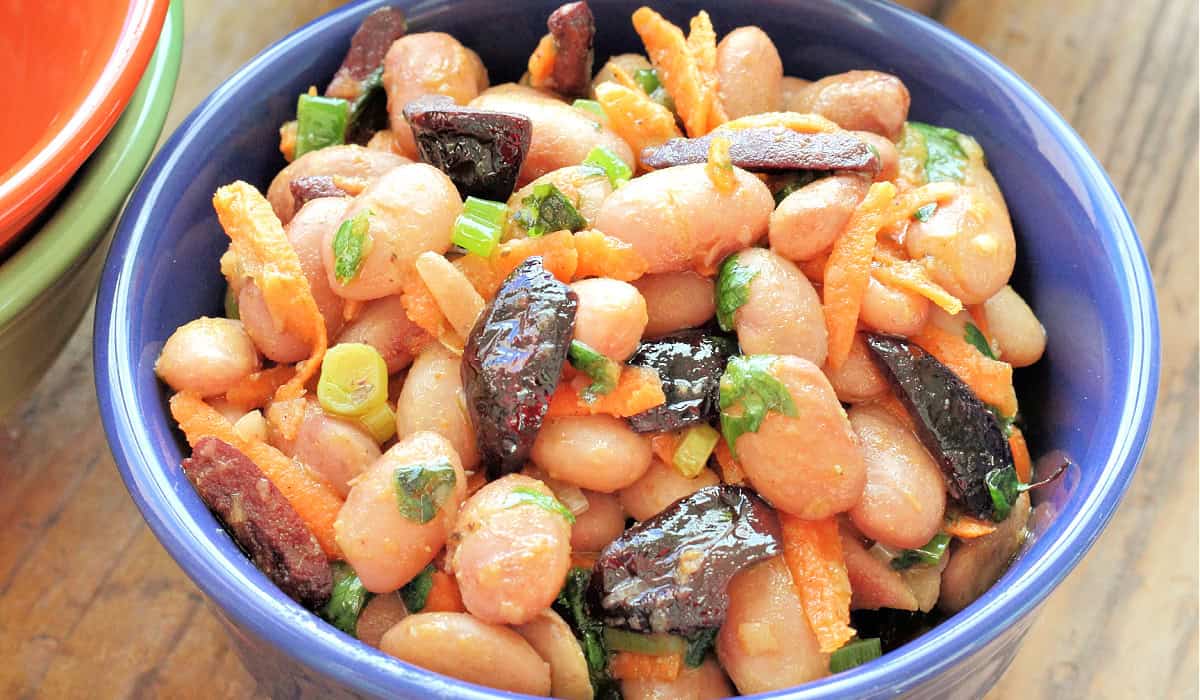
| Tuna and bean salad One tin of tuna, one tin of white beans, red onion, celery, olive oil, lemon juice, fresh parsley. Eat it as is or on a piece of sourdough. About 35g protein, high fibre. Four minutes to make. |
| Lentil soup Red lentils, onion, garlic, cumin, tinned tomatoes, stock. Blend it or leave it chunky. A squeeze of lemon at the end. About 15g protein per bowl, 8g fibre. Make a big batch on Sunday and eat it for three days. |
| Leftover grain bowl A base of leftover brown rice or quinoa, whatever vegetables you have, some protein (cold chicken, a soft-boiled egg, chickpeas), good olive oil and lemon. Scales to whatever appetite allows. |
Dinner
| Salmon and roasted vegetables One salmon fillet, oven at 180C for 12 minutes. Alongside: a tray of whatever vegetables you have roasted in olive oil. Sweet potato or brown rice if appetite allows. About 28g protein, genuinely satisfying in a small portion. |
| Chicken with herbs A chicken thigh or small breast, baked until the skin is crisp (if on), with whatever vegetables. Season with lemon, olive oil, and herbs. About 30g protein. Not complicated. |
| Lentil dahl Red lentils, onion, garlic, ginger, cumin, turmeric, tinned tomatoes, a little coconut milk. Rich, filling in a very small bowl, high in both protein and fibre. Make it in batches. Eat it over three days without having to think. |
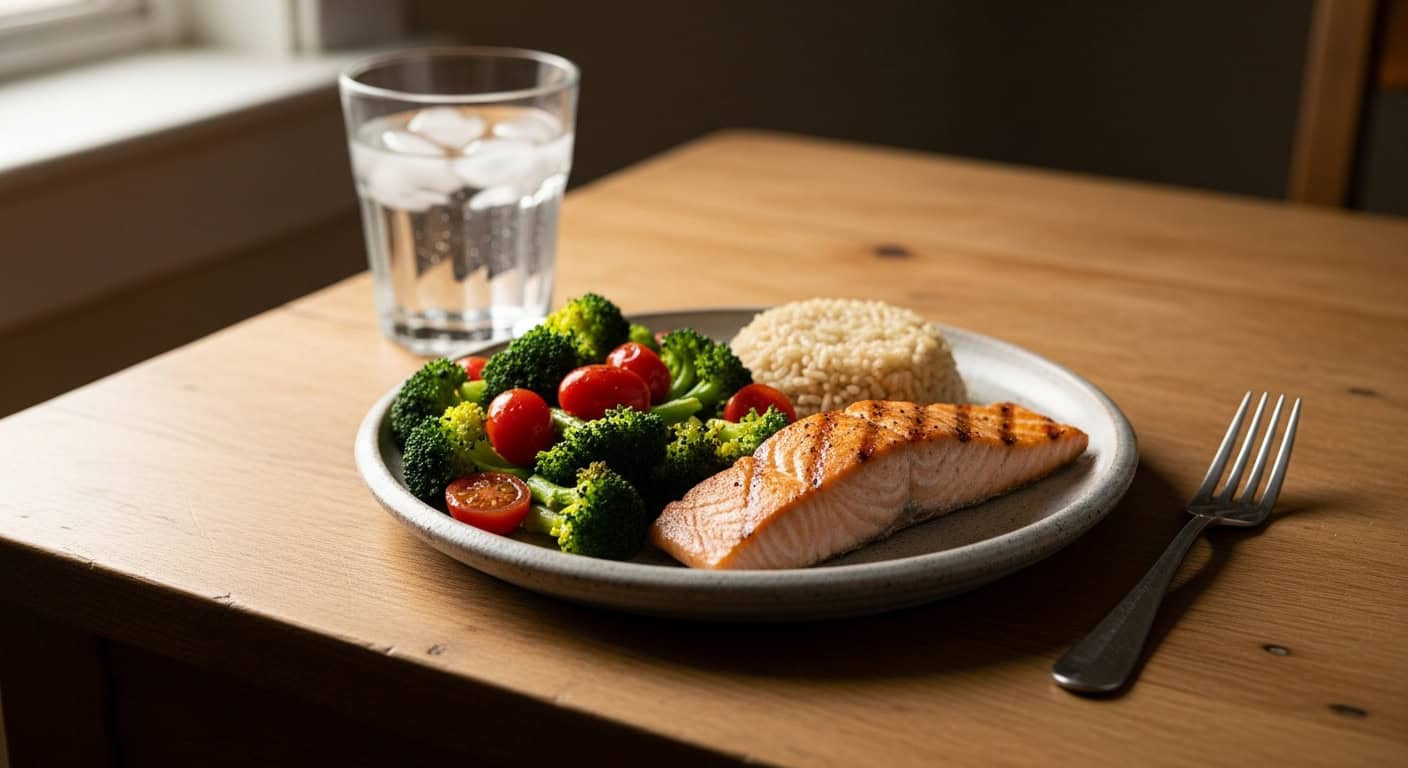
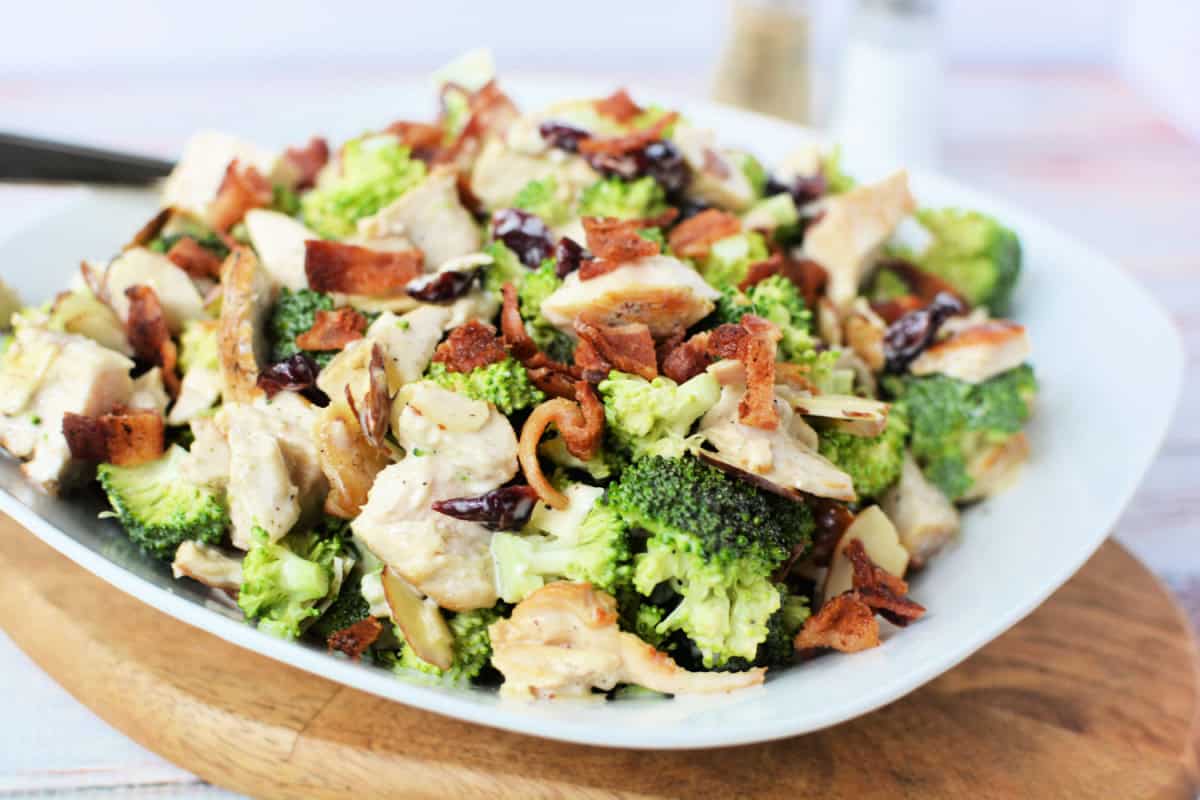
Salmon, roasted broccoli and tomatoes, a small amount of brown rice. About 28g of protein. Not photogenic, not complicated, exactly what you need.
The nausea question
Nausea is most common in the first few weeks and after dose increases. It gets better. In the meantime, food choices make a real difference.
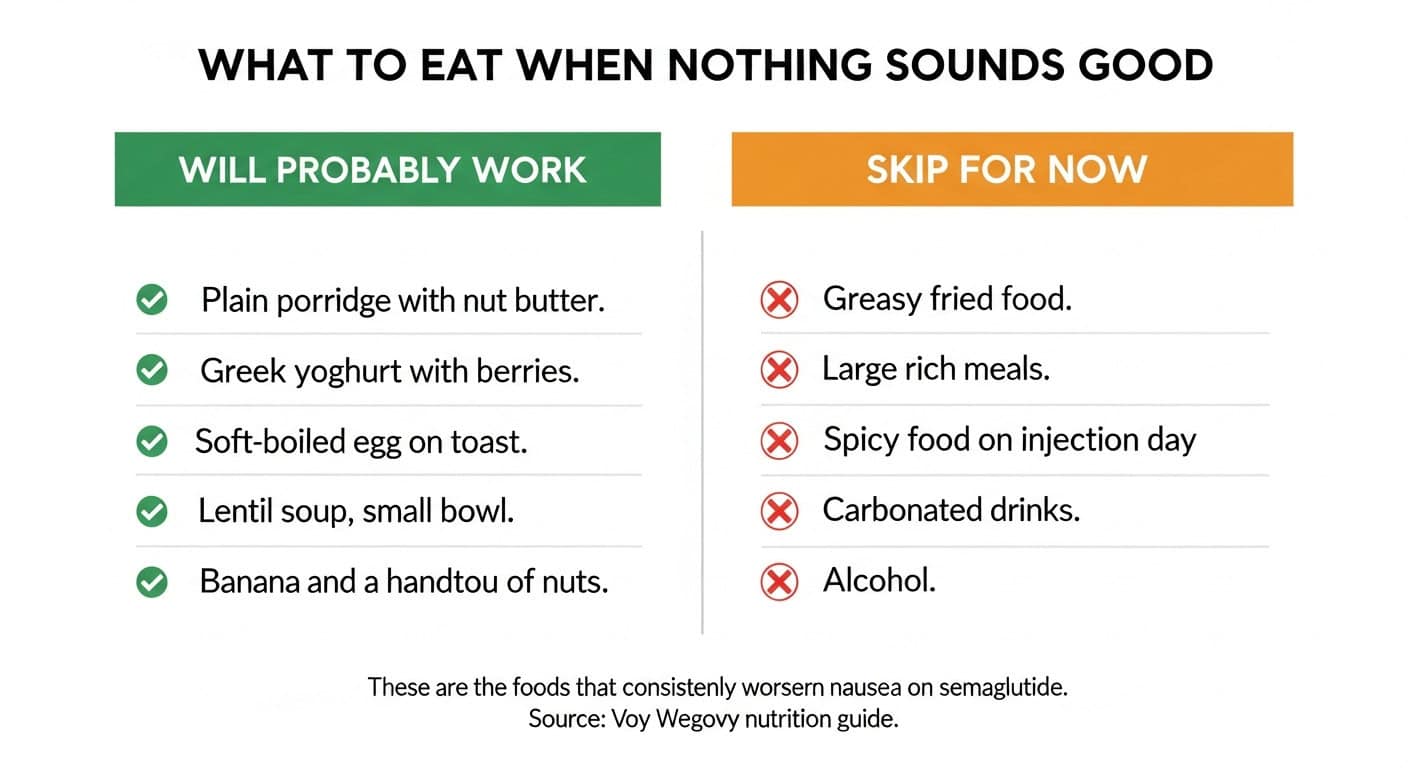
The foods that help and the foods that make nausea worse. The pattern is consistent: plain, low-fat foods on bad days, and avoiding anything rich or greasy on injection day.
Plain porridge, plain crackers, a banana, a piece of toast, ginger tea. These are what work on nausea days. Avoid anything fatty, greasy, or heavily spiced on injection day and the day after. Eat smaller amounts more frequently rather than trying to manage a full meal that is not going to happen.
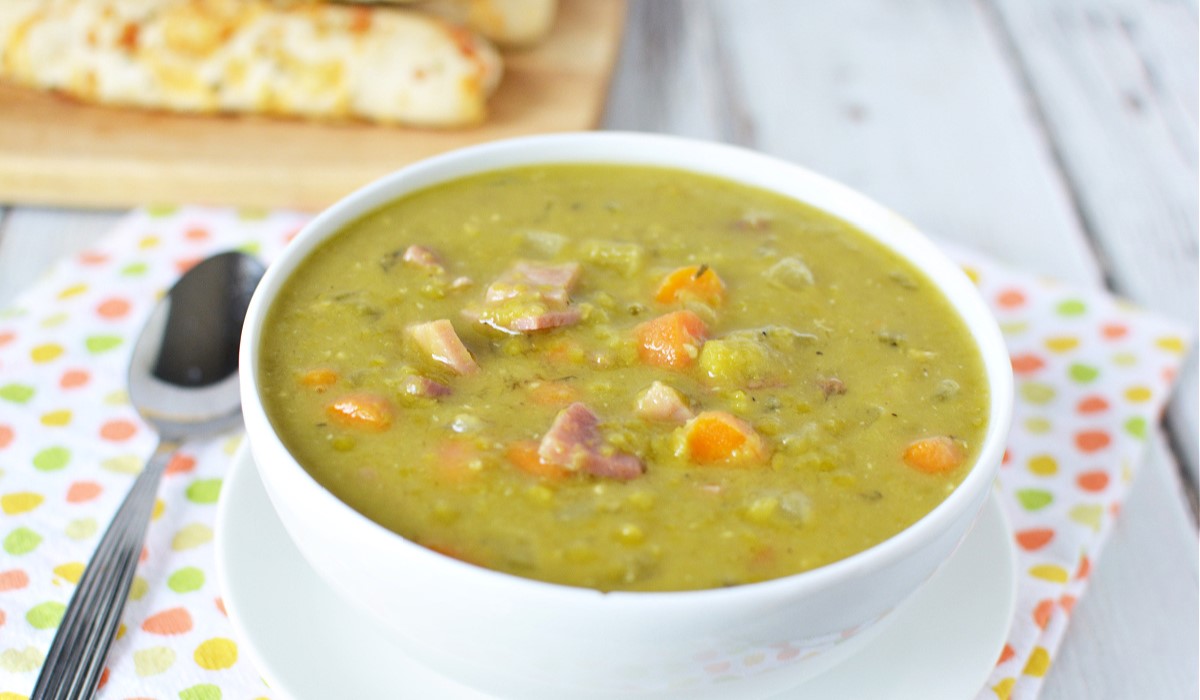
The nausea is temporary. It does not mean the medication is not working. It means your body is adjusting, and in a few weeks it will have adjusted.
| The nausea is your body getting used to something new. It is not a sign that you are doing it wrong. It is a sign that the medication is working and your digestion is adjusting. |
What not to eat (without making it a whole thing)
Nothing is banned. But a few things consistently make the Wegovy experience worse:
- Fried and fatty food. Wegovy slows gastric emptying. High-fat food was already slow to digest. On injection day and the day after, this combination produces nausea reliably. Just avoid it for those 24 to 48 hours.
- Carbonated drinks. Worsen bloating. Sparkling water included.
- Alcohol. Worth skipping in the first few weeks and after dose increases. When digestion is slowed, alcohol is processed differently and nausea is more likely. After the adjustment period, moderate amounts are fine for most people.
- White bread and refined carbs. Not catastrophic, but they digest quickly, do not contribute to your fibre target, and the blood sugar spike tends to make hunger return sooner. Worth swapping for wholegrain versions when it is easy.
Quick answers
Do I have to track calories on Wegovy?
No. Most people find that Wegovy naturally produces a calorie deficit because appetite drops significantly. If things are going well and weight is moving, tracking is unnecessary. If things have stalled, it can be useful to see what is actually happening with protein and fibre intake. But as a default, the plate model is sufficient without counting.
Do I need protein shakes?
Only if whole food protein is genuinely not working for you. On very low appetite days, a protein shake is a practical fallback: it is easy to drink when eating feels unappealing, and it gets your protein in. But it is a tool, not a requirement. You can hit your protein targets from real food if you build meals around one of the sources in the list above.
What if I just don't feel like eating at all?
Eat something anyway, even if it is small. Greek yoghurt, a soft-boiled egg, a small bowl of porridge. Not eating at all is worse nutritionally than eating a small amount of something. On days when genuine appetite is absent, prioritise: protein first, then fibre, then whatever else you can manage.
What is the easiest high-protein meal when I can't be bothered?
Greek yoghurt with berries and flaxseeds. Takes 90 seconds, requires no cooking, delivers 12 to 14g of protein, some fibre, and is genuinely enjoyable in a small amount. Keep a large pot in the fridge and use it whenever making anything more complex is not happening.
Is this a diet?
No. There are no rules here about what you cannot eat. The only practical guidance is: eat enough protein (for your muscles) and enough fibre (for your digestion). Everything else is personal preference and flexible around whatever your appetite allows on any given day.
| This article is for general informational purposes only and does not constitute medical or nutritional advice. Always consult a qualified healthcare professional before making significant dietary changes, particularly if you are taking medication. Individual results may vary. |
Sources
- Voy clinical nutrition team. Wegovy nutrition guide / Wegovy diet plan. joinvoy.com/blog/wegovy-diet-plan
- NHS. How to get more fibre into your diet. nhs.uk/live-well/eat-well/digestive-health/how-to-get-more-fibre-into-your-diet/
- Leidy HJ et al. The role of protein in weight loss and maintenance. American Journal of Clinical Nutrition, 2015.
- McCance and Widdowson. Composition of Foods Integrated Dataset. Public Health England.




Leave a Reply