
At 500,000 square meters (over 5.3 million square feet), the Grand Egyptian Museum is the largest archaeological museum complex in the world and the largest museum ever dedicated to a single civilization. It is designed not only to preserve and present Egypt’s treasures but also to transform Cairo into a global cultural capital that rivals Paris, Rome, and Athens.
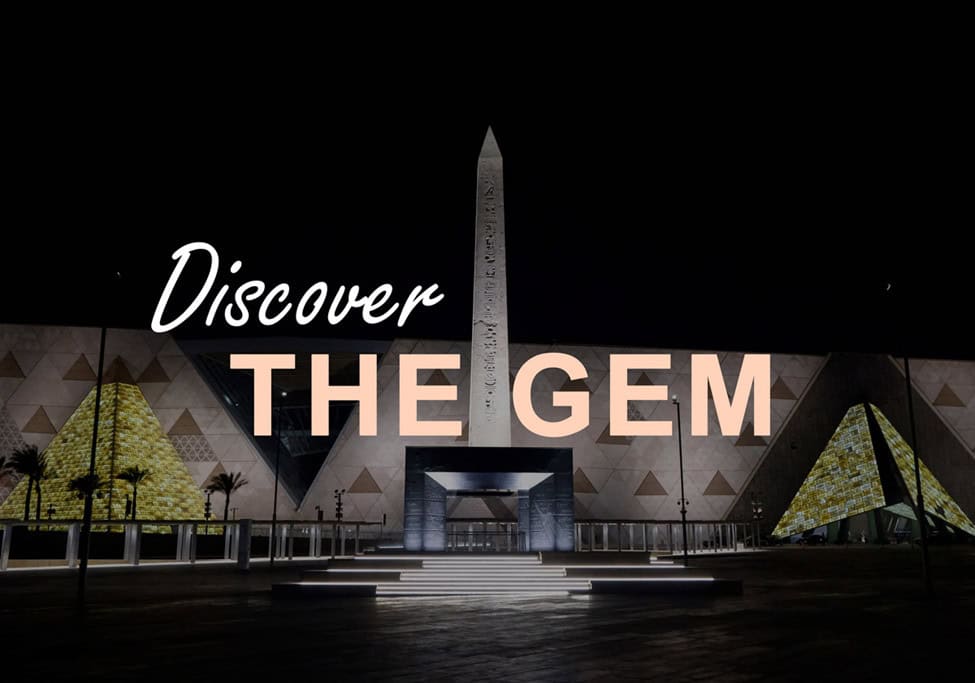
A Museum of Records and Superlatives
Largest Tutankhamun Exhibition in History: For the first time, all 5,400 objects from the tomb of Tutankhamun will be displayed together. Until now, only about one-third have ever shown publicly. Visitors will be able to walk through the boy king’s life, death, and legacy in an experience unmatched anywhere in the world.
Colossal Artifacts on Display: The centerpiece, a 30-foot statue of Ramses II, dominates the Grand Hall. It weighs over 80 tons and greets every visitor with the grandeur of Egypt’s greatest pharaoh.
Khufu’s Solar Boat: At 4,600 years old, this cedar vessel was painstakingly relocated from the Giza Plateau in 2021. It now rests in a climate-controlled hall, offering insights into Old Kingdom engineering and funerary rituals.
The Hanging Obelisk: A world-first engineering achievement suspends an obelisk above visitors, allowing them to see inscriptions on its base, something impossible when it stood upright.
Grand Egyptian Museum to Officially Open in November 2025
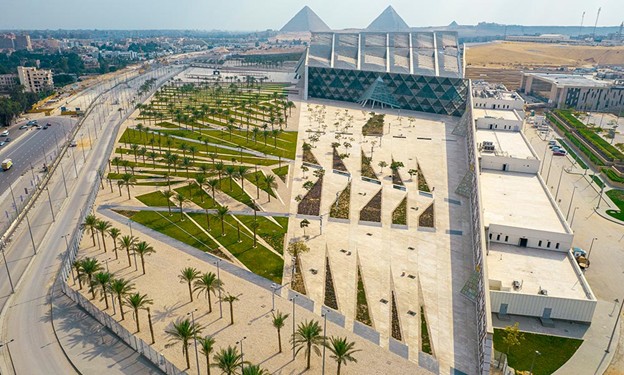
In November 2025, Egypt will inaugurate the Grand Egyptian Museum (GEM), the largest archaeological museum in the world and a landmark cultural achievement. Just two kilometers from the Giza Plateau, GEM’s striking glass façade is aligned with the Great Pyramid of Khufu, symbolizing the meeting of ancient heritage and modern innovation.
Covering 500,000 square meters, the museum will showcase treasures never before displayed together, including all 5,400 artifacts from Tutankhamun’s tomb, the colossal statue of Ramses II, Khufu’s 4,600-year-old Solar Boat, and the engineering marvel of the Hanging Obelisk. Designed as both a world-class visitor attraction and an international hub for conservation, GEM is set to redefine Cairo as a multi-day destination and herald a new golden era of global tourism.
A Masterpiece of Modern Architecture
The museum was designed by Heneghan Peng Architects in collaboration with Arup and Buro Happold, blending ancient geometry with futuristic design. Its 800-meter-long translucent alabaster wall filters light into the galleries, echoing the desert glow, while the triangular motifs of the façade mirror the shape of the pyramids.
The GEM houses one of the world’s largest conservation centers, with 19 specialized labs that serve not only Egypt but also the global archaeological community. This makes GEM a dual-purpose institution: a public cultural attraction and an international hub of heritage preservation.
Cairo as a Multi-Day Destination
For decades, Cairo was seen as a “stopover” city, with most travelers spending just one night before heading to Luxor or Aswan.
With GEM beside the pyramids and Sphinx, the city now offers a complete cultural hub capable of holding travelers for three to five days. This shift alone has the power to reshape Egypt’s tourism map.
Rising Visitor Numbers
In 2010, before political instability, Egypt welcomed around 14.7 million tourists. By 2024, that number had recovered and even surpassed, reaching 15.7–15.8 million visitors.
With GEM’s official inauguration in late 2025, the government expects to attract over 25 million visitors by 2026.
The strategic goal: 30 million annual visitors by 2030, a target supported by GEM’s global draw.
Boosting the Economy
Tourism already contributes around 8.5% of Egypt’s GDP (2024 figures). GEM is expected to significantly increase the average length of stay (currently about 6–7 nights) and boost per-visitor spending, especially in Cairo.
Analysts predict GEM could add $1–1.5 billion annually to tourism revenues within five years of full operation.
Infrastructure for a New Era
Egypt is pairing GEM’s opening with major infrastructure upgrades:
• Sphinx International Airport: Opened to reduce congestion at Cairo International and provide direct access to the pyramids and GEM.
• Electric Shuttle Buses & Visitor Center: Linking GEM with the Giza Plateau, allowing smoother flow between museum galleries and pyramid tours.
• Hotel Development: The government has announced plans to add 500,000 hotel rooms by 2030, much of it around Cairo and Giza, to meet surging demand.
GEM and the Global Stage
The Grand Egyptian Museum is not just Egypt’s project; it is the world’s. International organizations, including UNESCO and the Japan International Cooperation Agency (JICA), have partnered in funding and expertise. Japan alone contributed nearly $800 million in loans and technical support, underscoring the museum’s international importance.
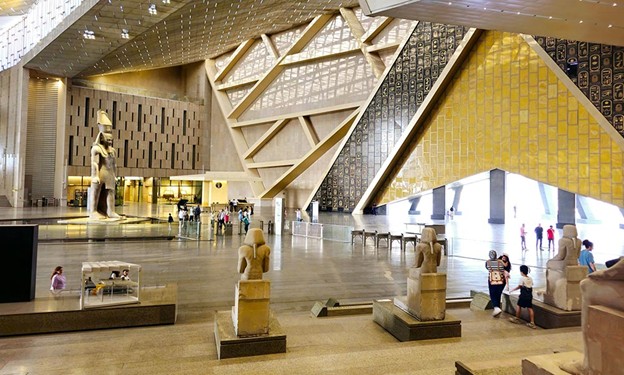
In the age of cultural diplomacy, GEM strengthens Egypt’s role as a custodian of world heritage and showcases how a nation can turn its ancient past into a driver of modern identity, pride, and economic power.
Practical Advice for Visitors
Tickets: Available only through the official GEM website or through top-rated agencies such as Egypt Tours Portal, which many travelers recommend for their reliability and expert-guided programs.
Best Days: Extended hours on Wednesdays and Saturdays allow visitors to explore without rushing.
Photography: Personal photography permitted, but no flash, tripods, drones, or livestreaming.
Pairing the Visit: Combine GEM with the Giza Plateau for a seamless full-day experience.
Tutankhamun Galleries: Reserve them for the grand opening in late 2025, a once-in-a-lifetime event.
A New Golden Era for World Tourism
The Grand Egyptian Museum is a monumental achievement, a fusion of ancient wonder and modern brilliance. It is Egypt’s gift to the world, offering the rare chance to stand before the pyramids and, within minutes, walk through 5,000 years of history under one roof.
For Egypt, GEM is more than a museum; it is a symbol of pride, a catalyst for growth, and a beacon of cultural leadership. For travelers, it is an unmissable journey through time, one that will redefine how humanity engages with its oldest civilization. With GEM, Egypt is not just showcasing its past; it is shaping the future of world heritage tourism.




Leave a Reply